


Modular Private Wireless

With a 4.9G/LTE and 5G Modular Private Wireless network you can meet the connectivity and application demands of small to very large industrial sites and field area networks – both indoor and outdoor. Are you a mobile operator? If so, you can leverage your network operation experience and use MPW’s distributed architecture to host enterprises in dedicated, private environment.
Take control of your digital transformation with Nokia 4.9G/LTE and 5G Modular Private Wireless
Getting seamless wireless coverage across your enterprise can be difficult due to the size of your campus, the changing environment and challenging radio conditions. Our 4.9G/LTE and 5G based private wireless solutions provide connectivity you can trust for mission and business use cases, delivering:
- Pervasive connectivity indoor and outdoor
- Deterministic performance
- Business critical reliability
- Seamless mobility
- Security
Benefits
Deploy private wireless your way
Design a private wireless network that meets the unique demands of your business and industry. MPW gives you the flexibility to support centralized or distributed network architectures and a variety of deployment scenarios including fully autonomous sites, distributed sites with a central core, local breakout and subscriber database synchronization and partnerships with a communication service provider to leverage existing infrastructure or roaming agreements
Modular and customizable
Benefit from a wide variety of services to address your diverse use case needs including mission critical wireless data connectivity, NB-IoT services and industrial digitalization capabilities with Nokia MX Industrial Edge.
Highly scalable and versatile
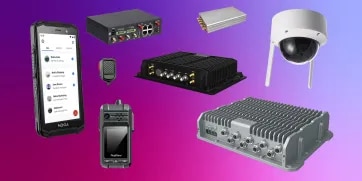
You can start small with MPW Lite and scale up easily with 100% investment protection to support up to up to 100,000 connected devices. MPW can be deployed on various ruggedized hardware to fit a wide range of use cases in harsh environments, particularly but not limited to the Defense industry.
High availability and system reliability
Different architectures offer support for your diverse reliability requirements such as local high availability (HA) and geo redundant architecture
Private wireless from the #1 vendor


Better and more reliable performance
- Best in class radio technology from a leading telecom vendor
- Undisputed small cell leader
- Proven to deliver the best performance even in the most challenging industrial environments
- Thousands of private wireless networks already in operation supporting business- and mission-critical use cases


Beyond private wireless with a full digitalization platform
- Get the OT edge by adding Nokia Industrial Edge to enable local industrial 4.0 use cases
- Access a large catalog of Nokia and 3rd party industrial digitalization applications
- Onboard your own OT app
- Benefit from integrated industrial protocols and cloud connectors


Industry preferred, most adopted private wireless solution
- Recognized by all top analysts as the undisputed leading private wireless vendor
- Over 50% private wireless customer market share
- 30+ years of enterprise critical networking experience
- 1000+ private wireless customers in all industrial segments
FAQ
Wi-Fi access points on high ceilings are unable to provide sufficient indoor and outdoor coverage since the area is too large.
Answer:
Just one 4.9G/LTE or 5G indoor radio provides the same coverage as 10 Wi-Fi access points, and one outdoor radio provides up to 30km coverage. 5G private wireless can easily provide ubiquitous and reliable coverage in any environment.

How can I end patchy coverage?
Why does this issue arise?
For a smart shopfloor to be really smart, it needs sufficient wireless coverage of the entire space so all your digital assets can stay in touch. Doing this with Wi-Fi can be challenging. It means installing many access points which can cost a fortune. And even then, you're likely to get spots where the signal is still not reaching.
How MPW fixes it
Private wireless technology enables radio waves to be emitted at higher power than other solutions. And, because it can operate in lower frequency bands, one PW access point provides the same coverage as up to 100 Wi-Fi access points. So it's much easier to cover a large expanse - as well as a lot quicker, cheaper and more reliable.
Benefits
Fewer access points required
Lower energy consumption
Smaller networking footprint needed
Lower maintenance costs
Despite adding more Wi-Fi APs and tweaking network parameters, my employees are still frustrated about lagging applications and use case bugs, even in areas of coverage.
Answer:
5G provides deterministic performance even in areas of high traffic with many users per cell in the most challenging and dynamic radio environments.
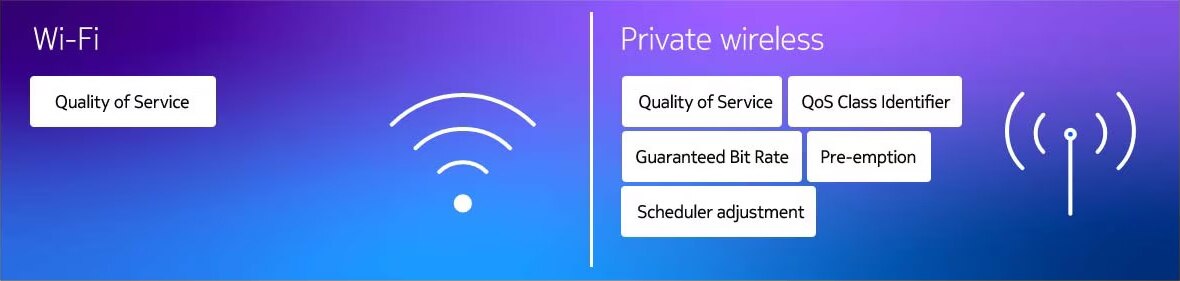
I need to improve my network's quality of service
Why does this issue arise?
Wi-Fi is based on the Listen Before Talk (LBT) protocol. So, if a channel is busy, the device will wait until it can transmit. This causes unpredictability and delays in data transmission - just what you don't need in a busy warehouse. The result is apps that lag and poor device performance.
How MPW fixes it
With its automated resource scheduler which manages transition in a much more efficient way than Wi-Fi, private wireless technology is simply smarter. Using advanced technology, the access points can constantly prioritize and optimize your application's performance. This means that the latency needed for remote crane/truck operation in a mine or the throughput required for high-resolution video streaming in a rescue operation remains constant.
Benefits
Less downtime
Higher productivity
Better user experience
Wi-Fi is unable to support mobility, which leads to latency peaks when handing over from one access point to another.
Answer:
5G natively supports seamless mobility for up to several hundreds of km/h, enabling reliable connectivity even when assets are moving at high speed or operating outdoors.
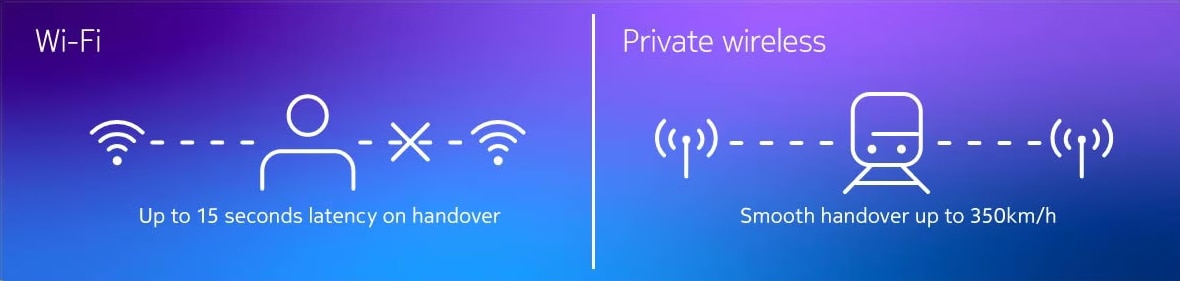
My automated vehicles lose connections on the move
Why does this issue arise?
To move freely, mobile assets like AGVs and AMRs require seamless connectivity to exist between radio access points. When Wi-Fi is used, the handover decision is made by the device itself, resulting in either very slow handovers or disconnection. This impacts productivity and potentially also worker safety.
How MPW fixes it
Private wireless network technology is designed specifically to enable mobility. It offers better tracking, handover and coverage even in the most challenging situations compared to Wi-Fi. Imagine, for instance, traveling on a bullet train at 200 km/h, with reliable connectivity throughout your journey. No problem for PW! And if it can cope with those speeds, you can be sure it will keep your AGVs connected and on the move.
Benefits
Less downtime
Higher productivity
Improved worker safety
My Wi-Fi network is overloaded and adding more access points or new channels will only degrade performance given the increased interference that it will create.
Answer:
5G operates in dedicated spectrum, and with advanced resource prioritization and interference management you get predictable performance even when heavily loaded.
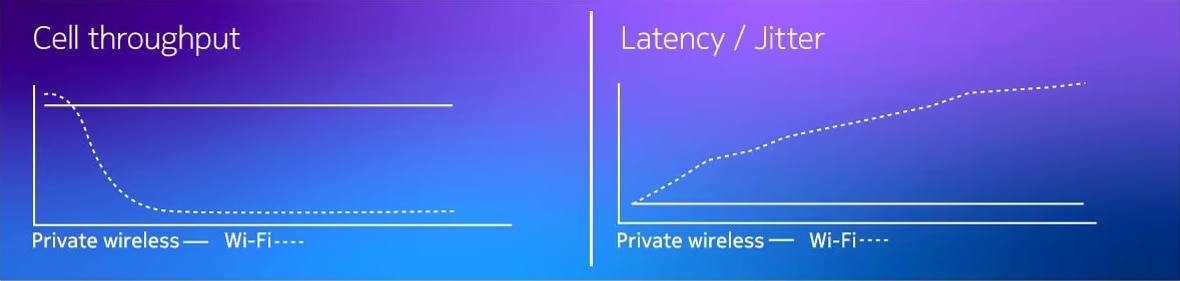
Scaling up can be a challenge
Why does this issue arise?
As you add more users to a Wi-Fi coverage area, network performance will dramatically drop. This prevents you from scaling your network efficiently. Adding more access points can actually make the situation worse. That can increase interference and reduce quality of service even further.
How MPW fixes it
A private wireless network utilizes dedicated radio frequencies, which allow it to prioritize the demands placed on the network. Sophisticated interference mitigation techniques also deliver steady, predictable performance even when the network is heavily loaded. This ensures that you can scale up at any time as your needs increase over time.
Benefits
Greater scalability
Higher productivity
More future proof
How MPW works
The MPW solution is comprised of mandatory and optional components. Mandatory components include a selection of indoor/outdoor 4.9/LTE & 5G radio portfolio, the Compact Mobility Unit which implements 4G/5G core network and IP transport to interconnect the components. Optional components include network management (MantaRay NM) and MX Industrial Edge (MXIE), both of which you can easily deploy for maximum benefit to digitalize your enterprise.
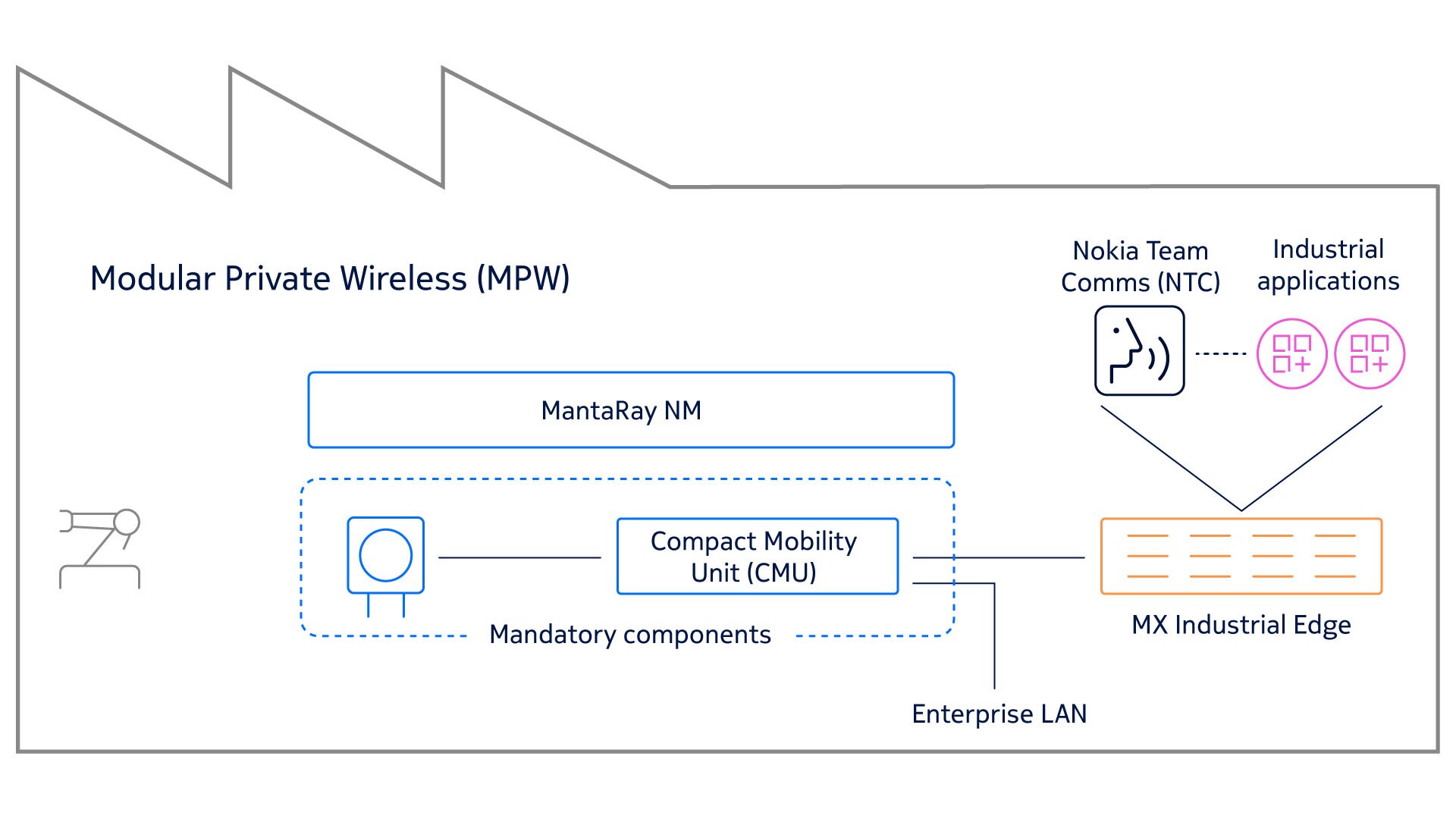
Please click the image to enlarge

Monitor MPW network performance with AI
Nokia Network Digital Twin - Digital representation of how devices experience your wireless networks.
What industry analysts say about Nokia private wireless?
Customer success stories

Use case: Finland’s Posiva was the first company in the world to build a safe disposal facility for spent nuclear fuel. Its latest process innovation involves transporting waste through underground tunnels with remote-controlled vehicles and autonomous robots to keep human operators safe. That required a highly reliable network that could function nearly half a kilometer below the surface of the Earth.
Using Nokia MPW, Posiva now benefits from advanced automation for its underground nuclear waste disposal process, leveraging mission-critical connectivity powered by the latest private 5G technology. This allows Posiva to ensure maximum safety in its hazardous nuclear waste disposal process.
Results:
- Minimized human presence in a hazardous operational area to meet safety requirements
- Enhanced productivity and operational efficiency
- Improved brand and company reputation and trust

Use case: Brazilian electric power utility, Elektro, wanted to increase grid reliability and sought a robust solution to connect the necessary IoT devices to enable grid automation.
Nokia's MPW solution has allowed Elektro to connect 78k smart meters, 1300 load balancers and 850 concentrators leveraging nationwide private wireless network coverage.
Results: Elektro implemented grid monitoring to prevent illegal tapping and to increase grid reliability by up to 50% reducing revenue leakage by up to 80%

Use case: Sempra, a leading US developer of renewable energy, wanted to connect sensors to monitor data and the health of wind turbine pitch mechanisms and assembly
Leveraging the Nokia CBRS-based MPW solution Sempra now benefits from reliable connectivity across the 40 square miles of its 75MWh windfarm allowing the company to implement predictive maintenance of wind turbines.
Results: Sempra now has access to an efficient early warning system that allows it to perform predictive maintenance and save up to 90% of effort associated with turbine pitch assembly repair





Resources
Talk to a Nokia expert
Please complete the form below.
The form is loading, please wait...